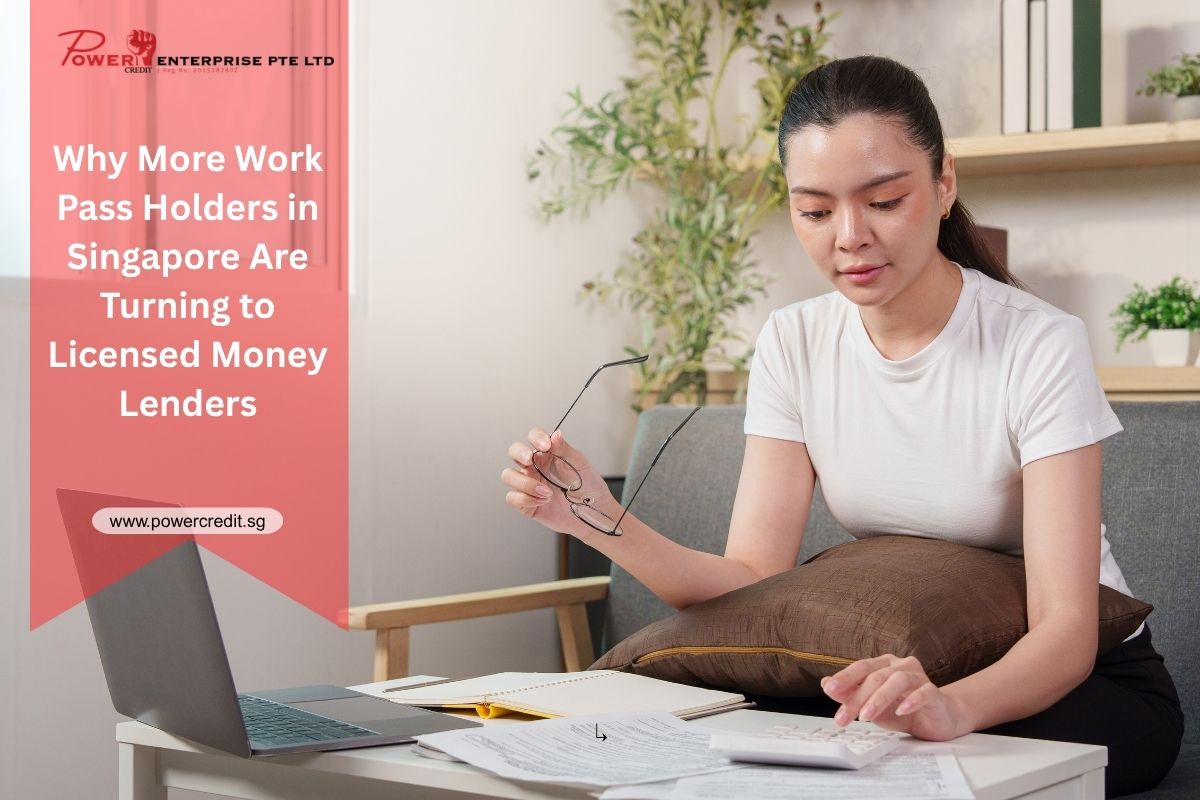
Why More Work Pass Holders in Singapore Are Turning to Licensed Money Lenders
Working in Singapore offers foreign employees valuable career opportunities, but managing financial responsibilities can sometimes be challenging. Between accommodation, daily expenses and supporting family members overseas, unexpected costs can place additional pressure on an already tight monthly budget.
When savings are insufficient, obtaining a foreigner loan may be an option. However, strict income requirements and credit assessments can make traditional bank loans difficult to secure, particularly for foreign workers who have only recently arrived in Singapore.
This explains why some work pass holders consider borrowing from a licensed money lender in Singapore. With different eligibility criteria, potentially faster processing and smaller borrowing amounts, licensed lenders may offer an alternative worth exploring.
1. More Accessible Loan Eligibility for Work Pass Holders
Banks typically assess loan applications using established income thresholds, employment requirements and credit histories. For foreigners, these conditions can be stricter than those imposed on Singapore citizens and permanent residents.
A work pass holder earning a stable monthly salary may still be ineligible for a bank loan simply because their annual income falls below the bank’s minimum requirement.
Different Eligibility Assessments for Foreign Workers
Licensed money lenders may consider applicants holding valid Employment Passes, S Passes or Work Permits. Their assessments generally focus on an applicant’s current employment, income, financial commitments and ability to repay.
This can provide additional borrowing options for foreigners who do not satisfy conventional banking criteria. Nevertheless, approval remains subject to the lender’s individual requirements and Singapore’s borrowing regulations.
2. Faster Loan Processing During Financial Emergencies
Unexpected expenses can arise without warning, particularly when foreign employees need to manage financial obligations in Singapore and their home countries.
Medical treatment, emergency travel or an urgent household expense may require funds before the next payday. In these situations, borrowers often place considerable importance on how quickly a lender can review their application.
Can Licensed Money Lenders Provide Same-Day Loans?
Some licensed lenders may complete straightforward loan applications and disburse funds on the same day. Processing times depend on the accuracy of submitted documents, eligibility checks and the lender’s assessment procedures.
Although initial enquiries may be submitted online, borrowers must undergo face-to-face verification at the lender’s approved business premises before a loan can be granted.
Applicants should therefore avoid lenders promising guaranteed instant loans without proper identity verification or affordability assessments.
3. Greater Consideration for Applicants With Limited Credit History
Foreign employees who have recently relocated to Singapore may not have an established local credit history. Even those who maintained excellent financial records overseas might find that their previous borrowing history carries limited weight with local banks.
Without sufficient credit information, banks may have difficulty assessing an applicant’s repayment behaviour. This can affect loan eligibility despite consistent employment and a reliable monthly salary.
How Licensed Lenders Assess Creditworthiness
Licensed lenders may evaluate additional indicators when reviewing foreigner loan applications, including:
- Length and stability of current employment
- Regularity of monthly salary payments
- Existing loans and financial commitments
- Monthly living expenses
- Remaining disposable income
For example, an S Pass holder with stable employment but no previous Singapore credit card or loan may still be considered. The lender must establish whether the applicant can comfortably manage the proposed repayments.
4. Smaller Borrowing Amounts for Immediate Financial Needs
Many financial emergencies require relatively modest sums. A foreign employee may need money for an essential repair, medical consultation or unexpected relocation expense without requiring a large personal loan.
Some bank loan products have minimum borrowing amounts that exceed these immediate needs. Taking out more than necessary can increase interest expenses and create unnecessary repayment obligations.
Borrowing Only What You Can Afford
Licensed money lenders may offer smaller loan amounts, subject to their lending criteria and the applicant’s financial circumstances.
Before borrowing, work pass holders should identify the exact expense and calculate how much they can realistically repay each month. Choosing an appropriate loan amount helps reduce the risk of repayment difficulties later.
5. More Straightforward Documentation Requirements
Applying for a bank loan can involve extensive financial documentation, particularly for foreigners whose employment or residency history in Singapore is relatively short.
Some applicants may not have previous local income tax assessments or an extensive banking history. Licensed lenders may use a more straightforward documentation process, although proper verification remains compulsory.
Documents Commonly Required for a Foreigner Loan
Depending on the lender, applicants may need:
- Valid passport
- Valid Employment Pass, S Pass or Work Permit
- Recent salary slips
- Employment contract or employer confirmation
- Recent bank statements
- Proof of Singapore residential address
Preparing these documents beforehand can help prevent processing delays. Borrowers should also ensure that all information provided is accurate and reflects their current financial circumstances.
6. Repayment Terms That Consider Individual Financial Circumstances
Work pass holders have different monthly commitments depending on their salary, accommodation arrangements and family responsibilities.
For instance, someone supporting dependants overseas may have substantially different expenses from another employee earning the same salary. These factors can affect the affordability of a loan.
Some licensed lenders offer different repayment arrangements based on the approved loan amount and the borrower’s financial profile.
Evaluating Monthly Repayment Affordability
Before accepting any foreigner loan, borrowers should calculate their remaining income after essential expenses.
Accommodation, transport, food, insurance and existing financial commitments should all be included. A manageable repayment schedule should leave sufficient money for emergencies and other unavoidable expenses.
Borrowers should also compare the total repayment amount, since longer repayment periods can result in higher overall interest costs.
7. Regulated Lending Practices and Borrower Protection
Foreign workers unfamiliar with Singapore’s lending environment may be concerned about dealing with money lenders. Understanding the country’s regulatory framework can help borrowers distinguish legitimate lenders from illegal operators.
A licensed money lender in Singapore must comply with the Moneylenders Act and applicable regulations administered by the Ministry of Law.
These requirements establish legal protections covering interest charges, permitted fees, loan agreements and lending practices.
Understanding Interest Rates and Permitted Fees
Licensed money lenders are generally subject to the following limits:
| Charge | Maximum Permitted |
| Interest | 4% per month |
| Late interest | 4% per month on overdue amounts |
| Late payment fee | S$60 per month of late repayment |
| Loan approval fee | 10% of loan principal |
The total interest, late interest and permitted fees charged cannot exceed the original loan principal.
These regulatory limits do not necessarily make licensed moneylender loans cheaper than bank financing. Eligible borrowers should compare actual interest rates, fees and total repayment costs before choosing a lender.
8. Borrowing Limits for Foreigners in Singapore
Unlike some bank products, unsecured loans from licensed money lenders are subject to aggregate borrowing limits established under Singapore’s moneylending regulations. These limits depend on the foreign borrower’s annual income and apply across licensed money lenders collectively.
How Much Can a Work Pass Holder Borrow?
For foreigners residing in Singapore, the general unsecured borrowing limits are:
| Annual Income | Maximum Aggregate Borrowing |
| Below S$10,000 | S$500 |
| S$10,000 to below S$20,000 | S$3,000 |
| S$20,000 and above | 6 times monthly income |
These represent regulatory ceilings rather than guaranteed approval amounts. Actual borrowing eligibility depends on the lender’s assessment of income, existing debt obligations and repayment capacity.
9. Choosing Between a Bank and a Licensed Money Lender
Although licensed lenders may offer greater accessibility, bank loans can provide more competitive interest rates for qualified applicants.
Work pass holders should compare the available options based on their borrowing needs, financial position and repayment capabilities.
| Factor | Bank Loans | Licensed Money Lenders |
| Income criteria | Often higher for foreigners | May accommodate lower-income applicants |
| Processing speed | Varies by bank | May offer quicker assessment |
| Credit history | Often an important consideration | May consider wider financial circumstances |
| Borrowing amounts | Depends on bank product | Smaller loans may be available |
| Borrowing costs | Often lower | Can be considerably higher |
Borrowers should prioritise affordability and the total cost of the loan. Fast approval offers little benefit if the resulting repayments place excessive strain on monthly finances.
Frequently Asked Questions
Can Work Permit Holders Apply for Loans From Licensed Money Lenders?
Yes, eligible Work Permit holders may apply for foreigner loans from licensed money lenders in Singapore. Approval depends on employment status, income, existing financial obligations and the lender’s assessment criteria.
Can I Apply for a Foreigner Loan Without a Singapore Credit History?
Some licensed lenders may consider applicants with limited local credit histories if they can demonstrate stable income and sufficient repayment capacity. However, a lack of credit history does not guarantee approval, and lenders must still assess the applicant’s creditworthiness.
How Can I Check Whether a Money Lender Is Licensed in Singapore?
You can verify a lender through the Ministry of Law’s official Registry of Moneylenders, which publishes a list of licensed businesses. Always confirm the lender’s registered name, approved address and contact details before submitting an application.
Find the Right Foreigner Loan for Your Financial Needs
For work pass holders facing financial challenges in Singapore, traditional bank loans may be difficult to obtain because of income thresholds, credit requirements or limited employment history.
Licensed money lenders offer another financing option for eligible foreign employees, with potentially quicker processing, smaller borrowing amounts and eligibility assessments that consider different financial circumstances.
However, borrowers should carefully review the interest charges, applicable fees and repayment schedule before committing to any loan.
Power Credit, a licensed money lender in Singapore, is one option for work pass holders exploring foreigner loan solutions. Eligible applicants can contact Power Credit to enquire about its loan requirements, application procedures and available repayment terms.
Looking for a Foreigner Loan in Singapore? Contact Power Credit to Explore Your Options Today.
If you like this article, you may want to read this article about the 7 Payday Loan Misconceptions That Could Affect Your Financial Decisions.
If you are looking for a payday loan, licensed money lender in Singapore or personal loan, contact us today and we will recommend your best options.